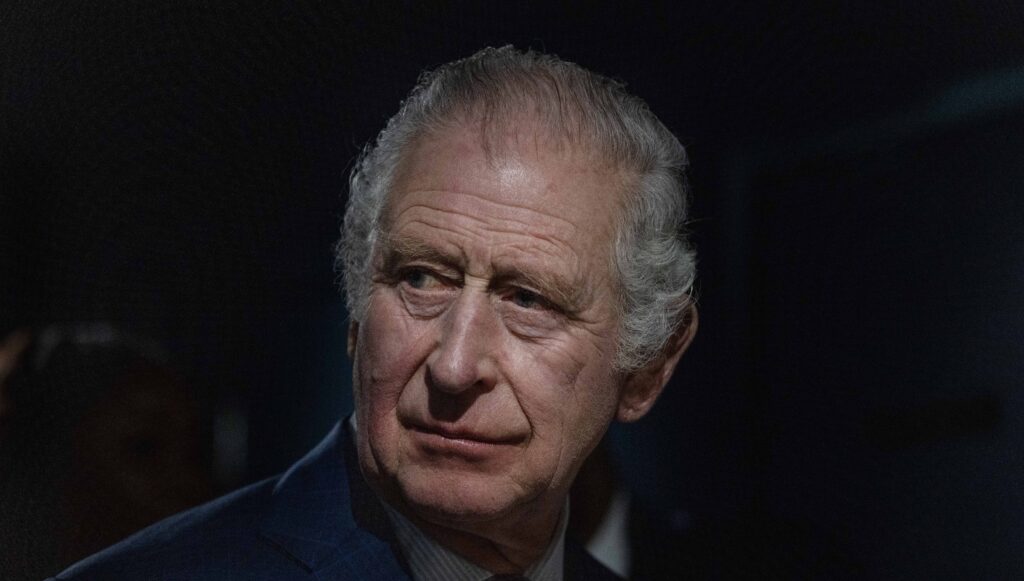
Ruler Charles III was determined to have malignant growth after he went
through a system for an expanded prostate, Buckingham Castle said
Monday, yet it didn't get out whatever sort of disease it was or the way
that serious the condition is.
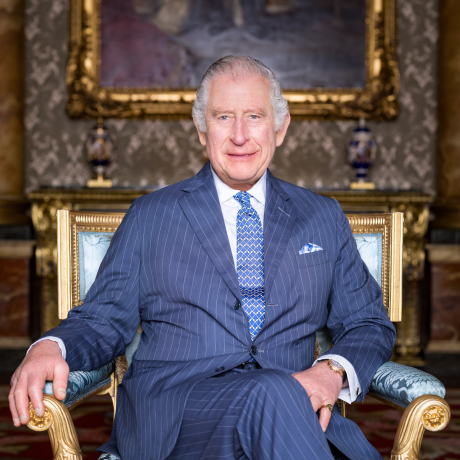

"During The Lord's new clinic technique for harmless prostate broadening, a different issue of concern was noted. Resulting symptomatic tests have recognized a type of disease," the royal residence said in an explanation.
It indistinct type of malignant growth was identified, yet the castle said Charles doesn't have prostate disease.
An expanded prostate isn't connected to disease, and it is moderately normal among more established men: Around 80% of men over age 70 make them accord, to Yale Medication. Charles turned 75 in November.
Now and again, the condition can prompt side effects, for example, trouble peeing, loss of bladder control or awakening around evening time to pee on numerous occasions. In such cases, specialists will frequently suggest a transurethral resection, a method to eliminate additional prostate tissue.
"They go in and they scratch some tissue so you can pee better, in light of the fact that the issue with the prostate is it's sitting right at the foundation of the bladder and it can obstruct pee," said Dr. William Goodness, the central clinical official of the Prostate Malignant growth Establishment.
Part of a transurethral resection includes embedding an extension — a cylinder with a camera toward the end — through the urethra. Like that, specialists can see the prostate and know where to eliminate the tissue.
The degree could recognize malignant growth in adjacent regions, like the bladder or the urethra, said Dr. Christian Pavlovich, a teacher of urology and oncology at Johns Hopkins Institute of Medication.
"Once in a while you'll have a bladder cancer or something not suggestive, and you'll simply see it when you go in there," he said.
A degree could likewise recognize horrendous pee, "which could mean something draining from the kidney," said Dr. Justin Friedlander, a teacher of urologic oncology at Fox Pursue Disease Center. That could be an indication of kidney malignant growth or disease in the ureter, he said — the cylinder that passes pee from the kidney to the bladder.
In different occurrences, specialists might find dangerous tissue that started in different pieces of the body while they're dissecting prostate tissue that was eliminated during a medical procedure.
"The prostate could be impacted by diseases that are not actually of prosthetic beginning, similar to a lymphoma — one of those blood growths — or a disease of the urothelium, which is the coating of the urethra and bladder," Pavlovich said.
That would flag the malignant growth had spread from different organs and was possibly further developed, Friedlander said.
Dr. Julio Pow-Sang, the seat of the genitourinary oncology program at Moffitt Malignant growth Community in Tampa, Florida, said finding dangerous tissue during a technique for prostate enlargement is by and large uncommon.
That's what he said "90 or 95% of the times it's harmless, however you could have a shock."
Buckingham Castle didn't determine Monday what sort of strategy Charles went through for an expanded prostate, yet it has recently alluded to it as "restorative."
Some of the time, rather than playing out a transurethral resection, specialists will obliterate overabundance prostate tissue with a laser or high intensity — however those methodology are more uncommon.
As per Buckingham Castle, Charles showed up in London on Monday to start customary short term therapies for malignant growth.
"His Highness is thankful to his clinical group for their master care and quick intercession, is entirely certain about his treatment and anticipates getting back to full open obligation at the earliest opportunity," the royal residence said.
